Structural Drying and Dehumidification Torrance, CA
After liquid removal, controlled airflow releases moisture from wet assemblies while dehumidification collects vapor and repeated material readings show whether the drying system is working.
(888) 563-9619Request structural drying help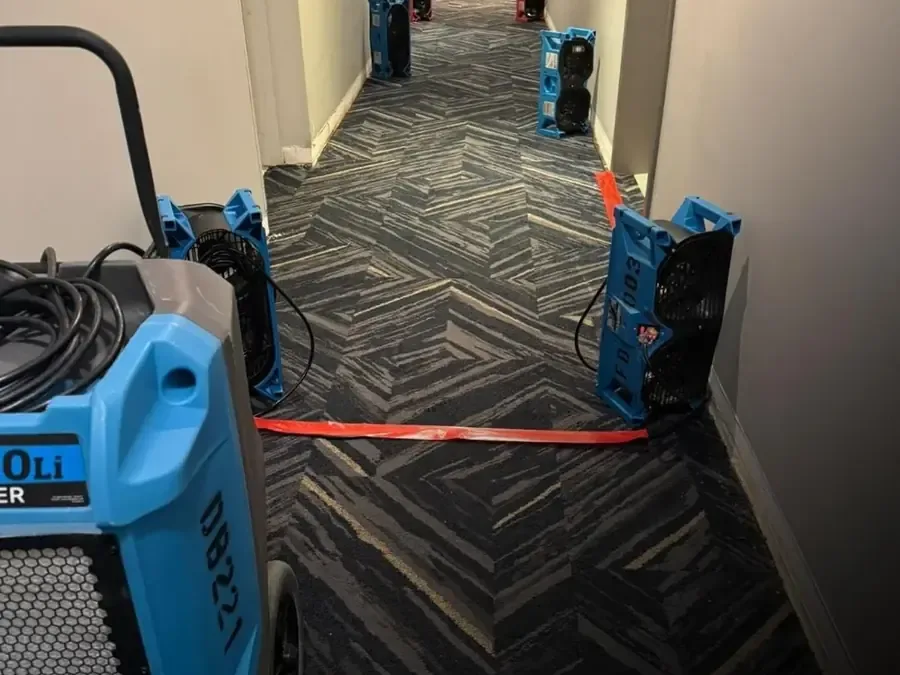
Structural Drying and Dehumidification at a glance
First steps for structural drying and dehumidification in Torrance
Finish liquid recovery first
Standing water should be extracted from accessible surfaces, seams, edges, and cavities before evaporation equipment carries the remaining load.
Protect the drying boundary
Keep doors, windows, occupants, and unrelated traffic from disrupting the controlled area unless the equipment plan calls for a change.
Leave equipment positions intact
Do not unplug or move air movers and dehumidifiers without discussing safety or operational needs with the restoration team.
Report new moisture signs
Share fresh staining, odors, condensation, or damp areas promptly because they may reveal another source or an incomplete boundary.
Structural drying begins after extractable water has been reduced and the affected boundary is understood. Torrance includes residential, commercial, and industrial properties, but equipment is never assigned from a land use label. In North Torrance, the calculation starts with the wet materials, exposed surface area, indoor conditions, and any cavity that limits evaporation.
Give moisture a way out of wet walls and floors
Air movers increase evaporation across reachable wet surfaces. Dehumidifiers collect the vapor released into the work area. Those actions must stay balanced: excessive airflow in the wrong direction can affect clean space, while insufficient humidity control can slow the entire assembly.
An Old Torrance building might contain finish transitions or enclosed edges that respond at different rates. A commercial room in the eastern industrial section can add access and operating constraints. Neither setting dictates a standard equipment count; readings and indoor conditions show how the drying chamber should be arranged.
What does structural drying and dehumidification cost in Torrance, CA?
Contained structural drying often costs $1,400 to $7,200. Material volume, cavity access, humidity load, finish permeability, contamination, and the number of monitored zones affect total cost.
Contained single room loss
$1,400 to $2,800- Small evaporation area
- Accessible wet materials
- Focused equipment chamber
Multi room drying
$2,800 to $7,200- Several material groups
- Connected humidity zones
- Repeated equipment adjustments
Complex removal and drying
$7,200 to $14,400- Restricted concealed assemblies
- Multiple drying chambers
- Extended monitoring and access
Ranges are typical, not a quote: category of water, square footage, material class and how fast drying started move the number most. Run the water damage cost calculator for a closer range.
The structural drying and dehumidification process in Torrance, step by step
- 1
Establish baseline conditions
Mark affected materials, comparison points, air conditions, and cavities that may restrict evaporation or equipment circulation.
- 2
Balance air and vapor collection
Aim airflow across wet surfaces while dehumidification manages moisture released inside the controlled boundary.
- 3
Read the response daily
Measure material points and indoor conditions, noting which assemblies improve and which require adjustment or access.
- 4
Confirm the slowest endpoint
Remove equipment only after lagging materials meet supported comparison goals and the final condition is photographed and recorded.
Measure materials as well as room air
Humidity data describes the air, while direct measurements reveal whether wallboard, framing, subfloor, cabinets, masonry, or other materials are improving. Test points are labeled and revisited. When one area stalls, the response checks airflow, vapor collection, concealed layers, and access before simply adding time.
- Confirm that standing water has been extracted
- Separate wet assemblies from unaffected occupied areas
- Direct air across actual evaporation surfaces
- Record air conditions and material values together
- Adjust equipment only from documented response
In Walteria, a wall base can recover sooner than wet insulation behind it. At an El Retiro property, flooring may lag behind exposed drywall. These examples show why the slowest material controls completion and why one room reading cannot represent every assembly.
Compare final readings with dry references
Drying goals use appropriate unaffected materials or other supported reference values. Final photographs and readings preserve the endpoint before equipment leaves. The water extraction page explains the preceding liquid removal phase, while the town service hub lists source specific restoration options.
Power availability, equipment drainage, occupied routes, and containment openings are checked because each can affect the stability of the drying environment.
Structural drying and dehumidification across Torrance and nearby towns
Structural drying is available in North Torrance, Old Torrance, Walteria, El Retiro, and all listed ZIP areas. Material measurements determine each equipment plan. Source services are listed on the local hub.
The same service nearby: structural drying and dehumidification in Lawndale, Redondo Beach, Hermosa Beach.
Related water damage services in Torrance
Structural Drying and Dehumidification questions in Torrance, CA
Still dealing with structural drying and dehumidification?
List the wet materials, rooms, and any cavities already opened for inspection.
Why is extraction separate from drying?
Extraction physically removes available liquid. Structural drying addresses moisture retained inside materials, using evaporation and vapor collection after the larger water load is gone.
How many air movers are required?
Equipment quantity depends on wet surface area, material type, access, containment, humidity conditions, and measured response rather than a fixed room formula.
Why are daily readings important?
They show whether materials are improving, identify slow zones, and support changes to airflow, dehumidification, containment, or access before progress stalls.
Can equipment be turned off overnight?
Unplanned shutdowns can interrupt the controlled environment. Safety, noise, or access concerns should be discussed so the setup can be adjusted appropriately.
Does dry room air mean the walls are dry?
No. Air conditions can improve while framing, insulation, subfloor, cabinets, or masonry still hold moisture. Direct material readings establish their condition.
When can drying equipment be removed?
The slowest affected points are compared with suitable unaffected material or another supported goal, then preserved with final photographs and equipment records.
What happens when one material stalls?
The response checks airflow, dehumidifier performance, concealed layers, coatings, and access at that location. A measured adjustment is made before the drying period is simply extended.
Wall and floor readings show when drying is complete
Technicians balance airflow and dehumidification, revisit marked points, and keep the slowest assembly at the center of decisions.
Lawndale Water Damage Restoration · Lawndale, CA