Water Damage Restoration Compton, CA
A backed-up drain in Sunny Cove or pipe leak in Downtown Compton can soak adjoining rooms. Restoration removes water, cleans surfaces, and dries the affected materials.
(888) 563-9619Arrange water removalHelp is available at any hour for water, sewage, and storm damage.
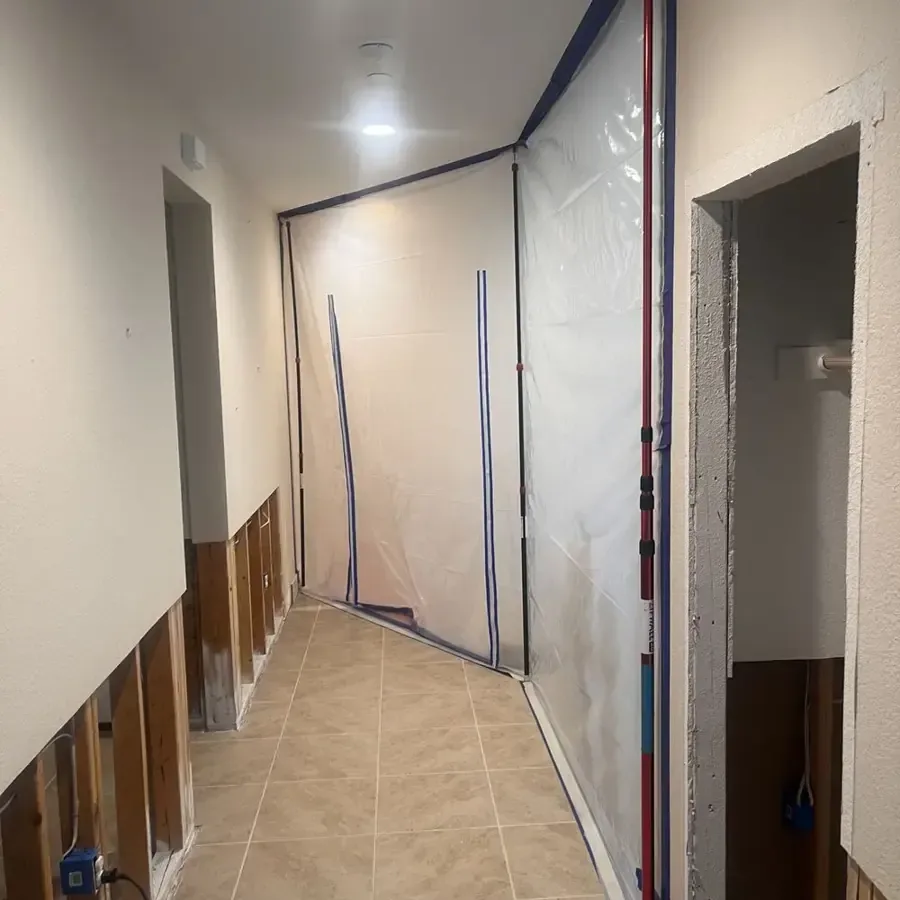
Water Damage Restoration Services in Compton, CA
Plumbing leaks, bathroom overflows, rain entry, and sewage damage need water removal, cleaning, and checks inside damp floors, walls, or ceilings.
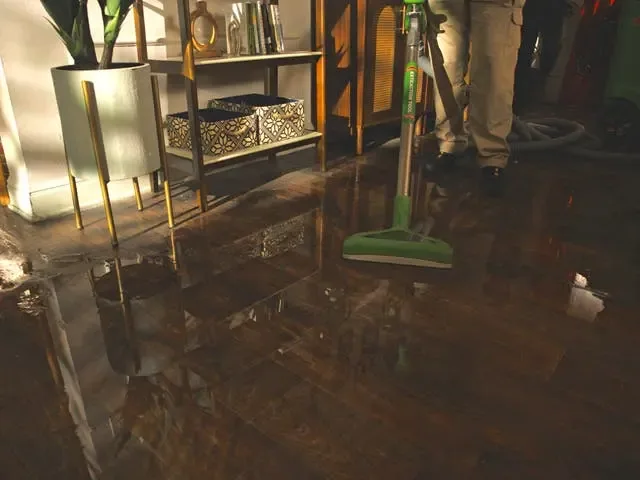
Water Extraction and Removal
Pumps and extraction tools remove standing water from rooms, flooring seams, and reachable edges before the remaining structure is dried.
See water extraction and removal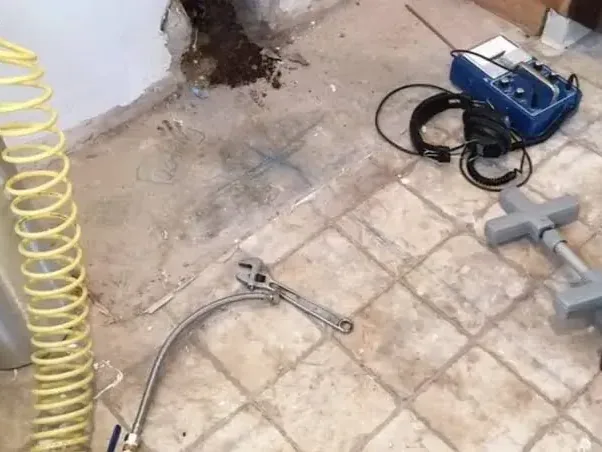
Slab Leak Water Damage
Damp or warm flooring needs plumbing checks and moisture readings to locate a suspected pipe leak beneath the finish.
See slab leak water damage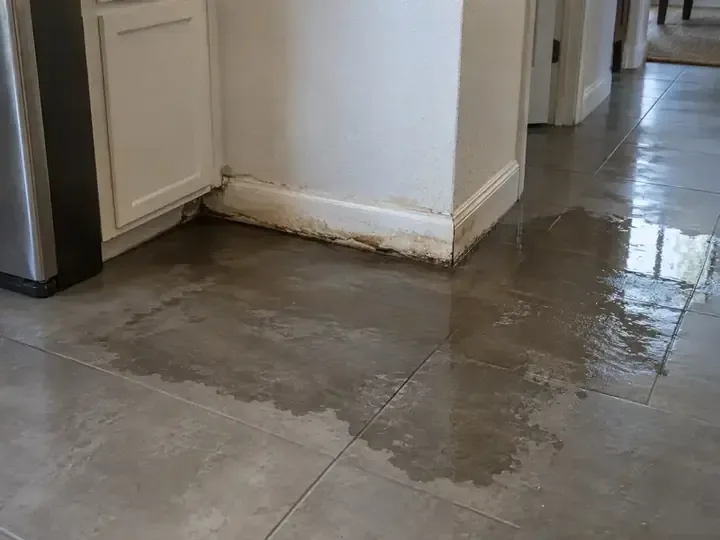
Appliance Leak Water Damage
Dishwasher and washer releases are traced behind the machine, beneath cabinets, and through floor seams into adjoining spaces.
See appliance leak water damage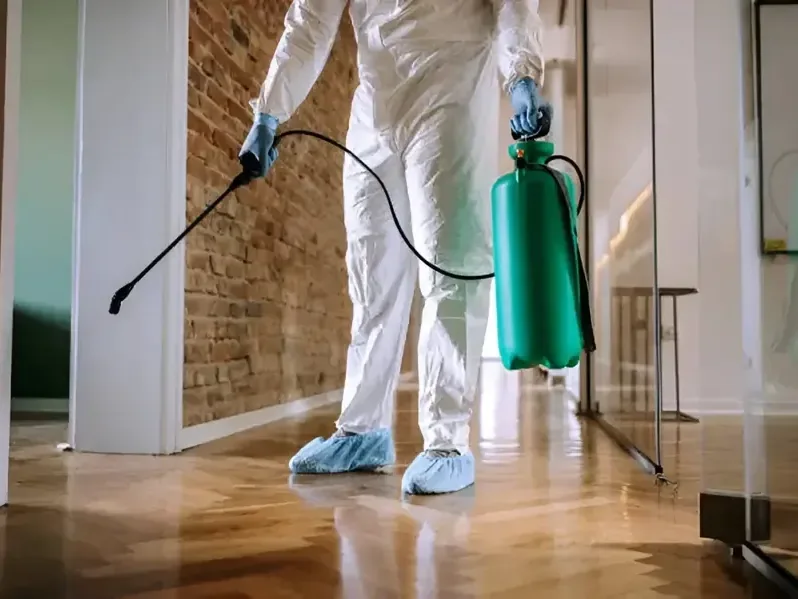
Sewage Backup Cleanup
After a drain backup, restricted access protects clean rooms while contaminated water is removed and exposed materials are cleaned.
See sewage backup cleanup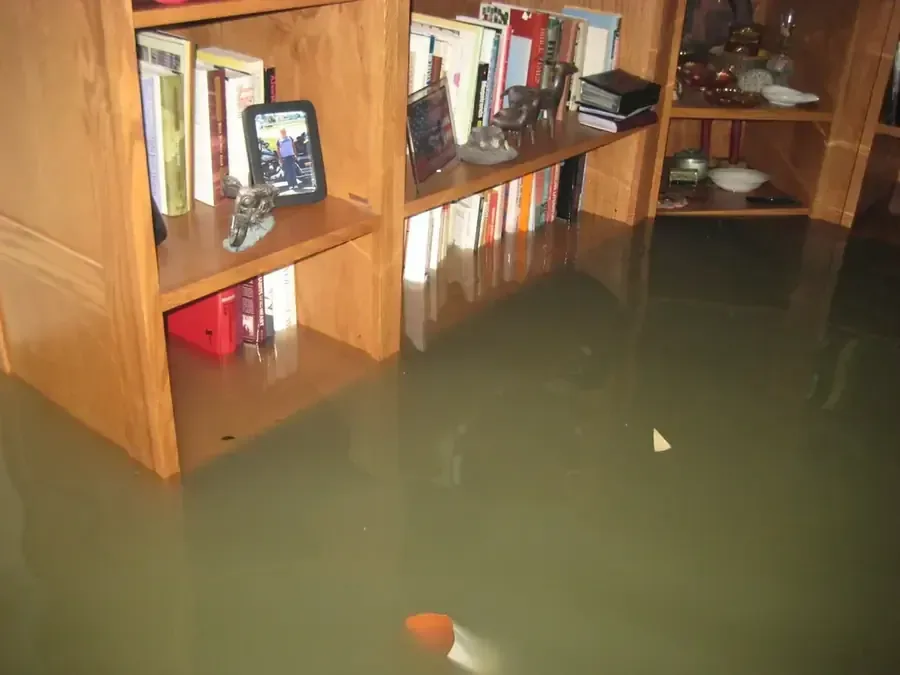
Storm and Flood Cleanup
Outside water is traced from the opening across wet rooms, with cleaning planned for debris and any contaminated surfaces.
See storm and flood cleanup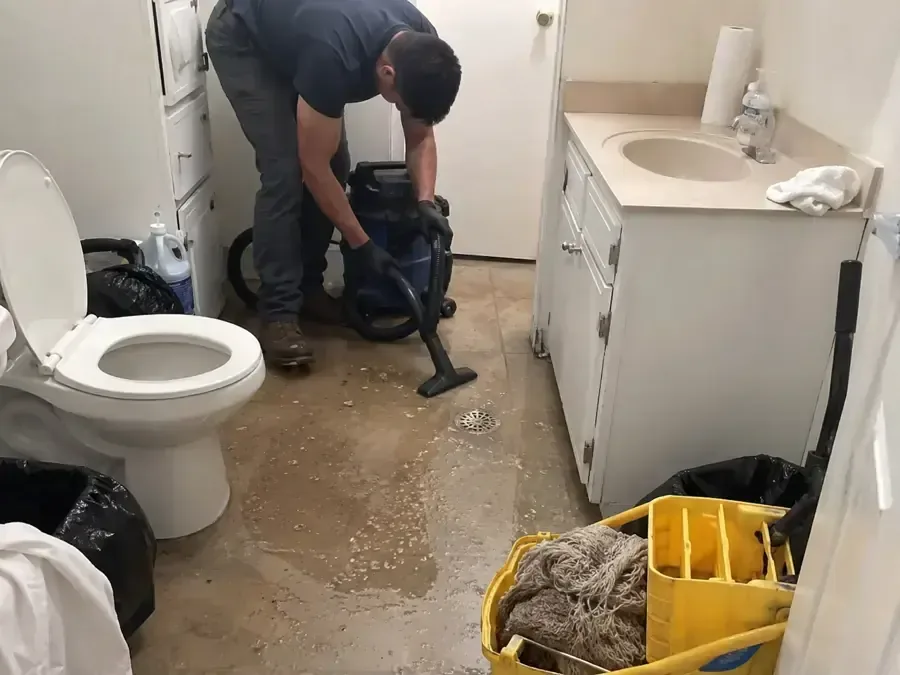
Toilet Overflow Cleanup
Cleanup follows overflow water around the toilet, beneath the vanity, and beyond the doorway before checking any room below.
See toilet overflow cleanup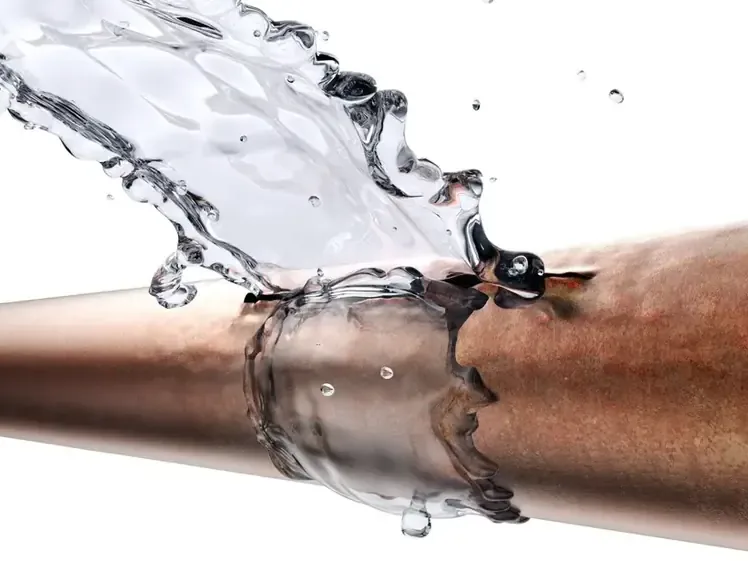
Burst Pipe Water Damage
Once a broken supply is controlled, inspection follows the release through walls, ceilings, and floors that may conceal trapped water.
See burst pipe water damage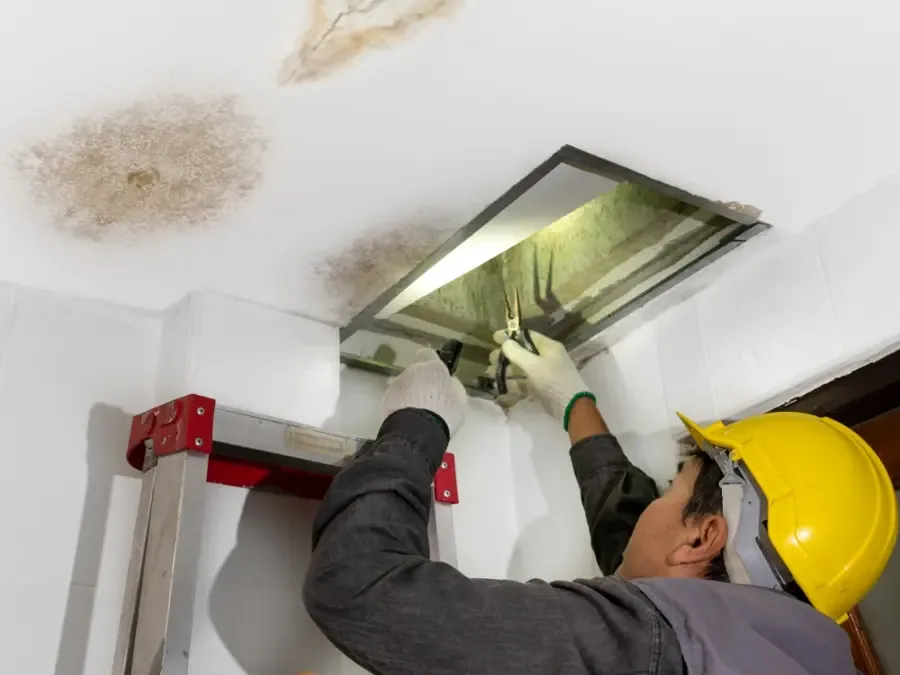
AC Condensate Leak Cleanup
A condensate pan or drain leak can leave insulation wet overhead and soak finishes beneath the cooling equipment.
See ac condensate leak cleanup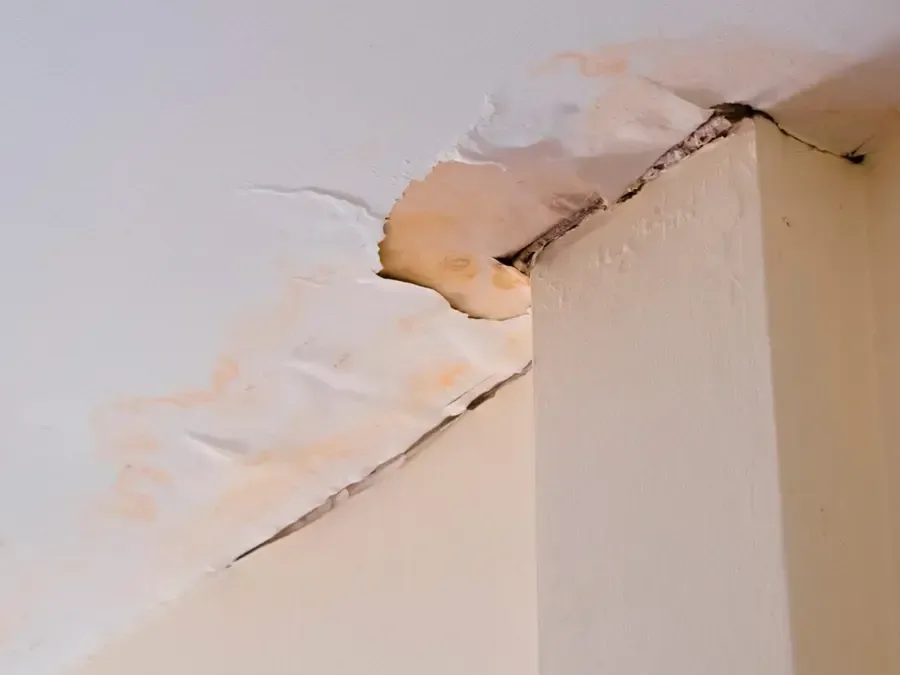
Ceiling Leak Water Damage
Stains and sagging drywall need safe inspection above the room to identify the source and assess wet ceiling materials.
See ceiling leak water damage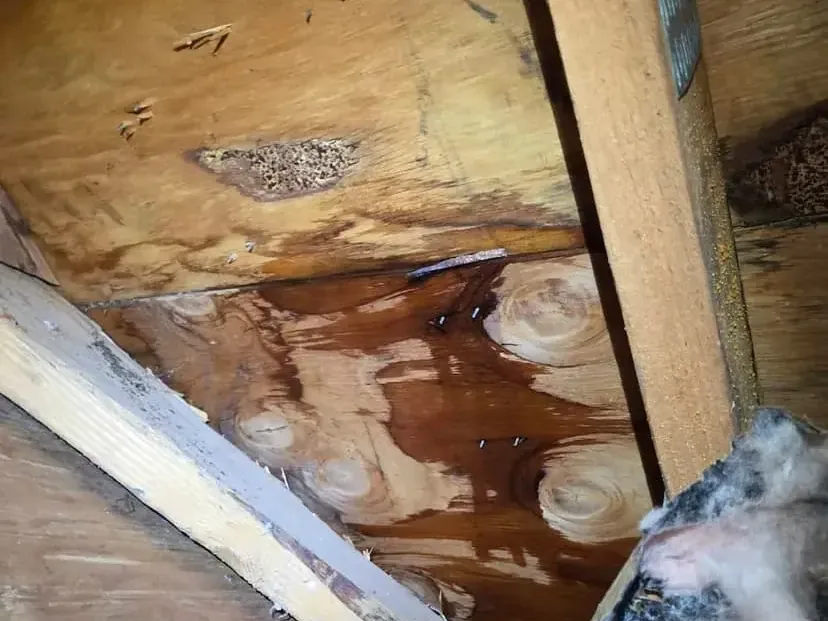
Roof Leak Water Damage
Rainwater is followed through attic framing and insulation while source protection prevents more water from reaching the rooms below.
See roof leak water damage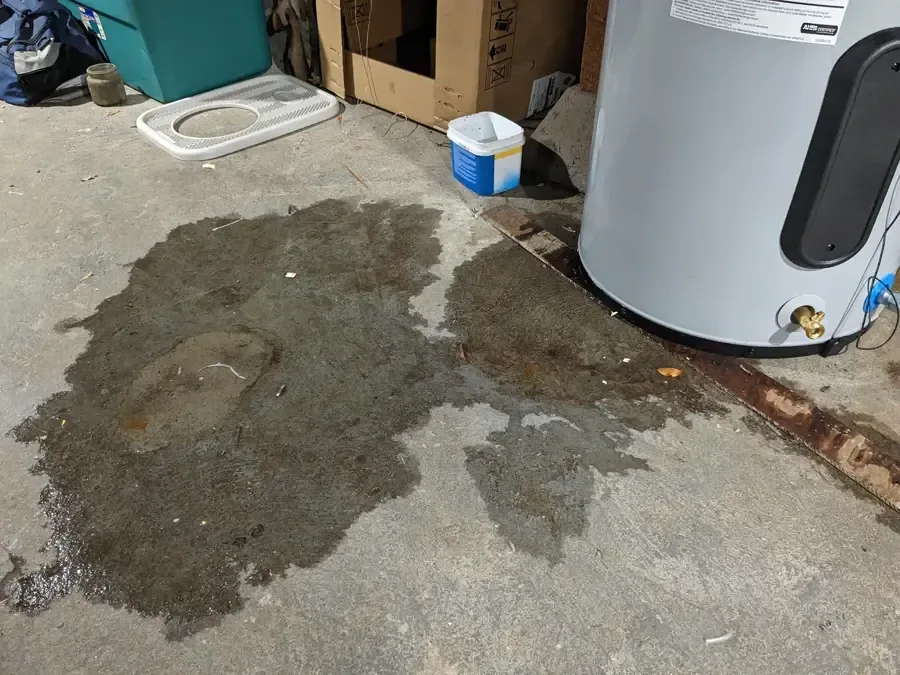
Water Heater Leak Cleanup
Water around a failed tank is removed before the utility platform, adjacent walls, and nearby floor transitions are checked.
See water heater leak cleanup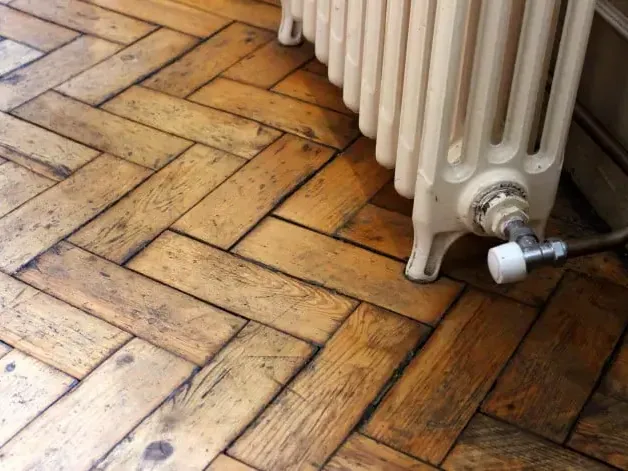
Hardwood Floor Water Damage
Board rows and accessible subfloor points receive separate moisture readings before floor drying, repair, or sanding decisions are made.
See hardwood floor water damage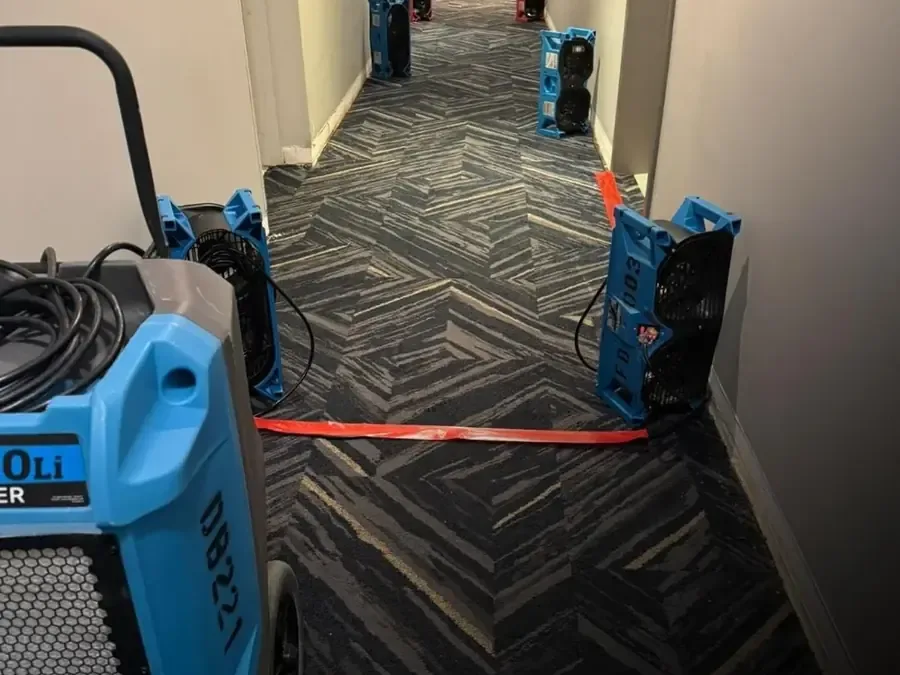
Structural Drying and Dehumidification
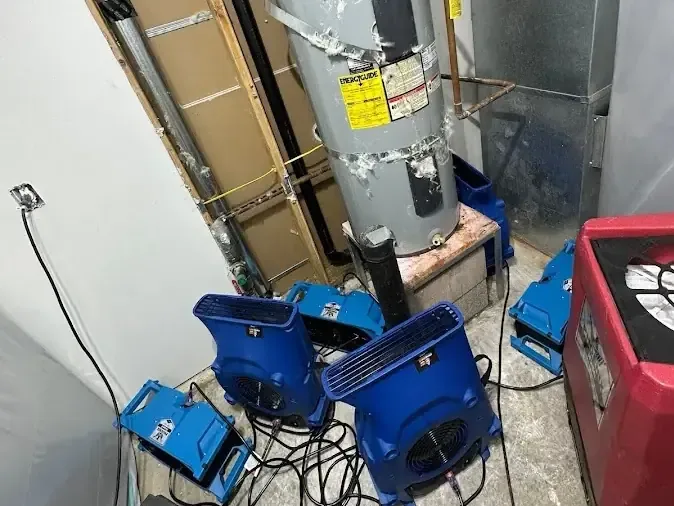
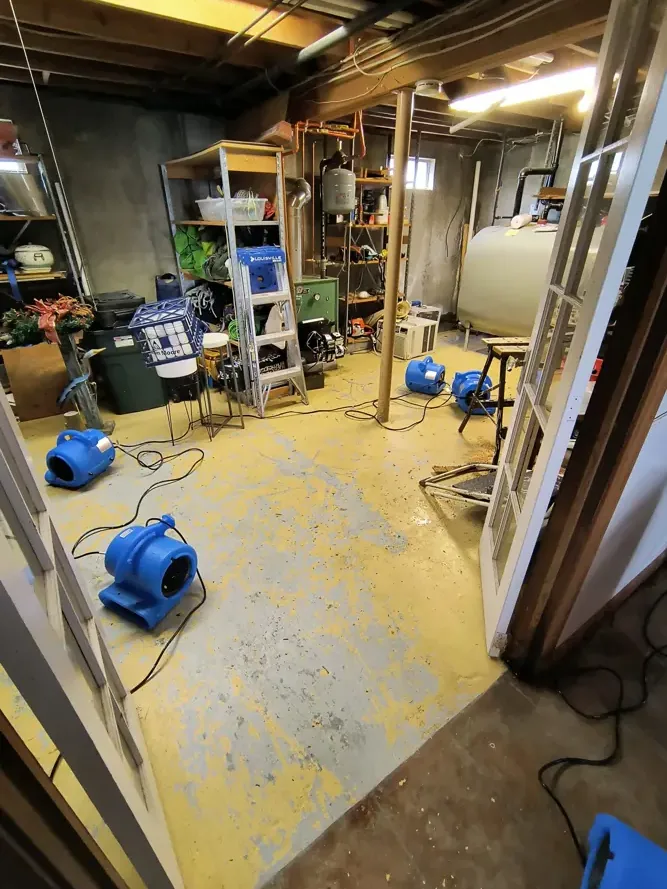
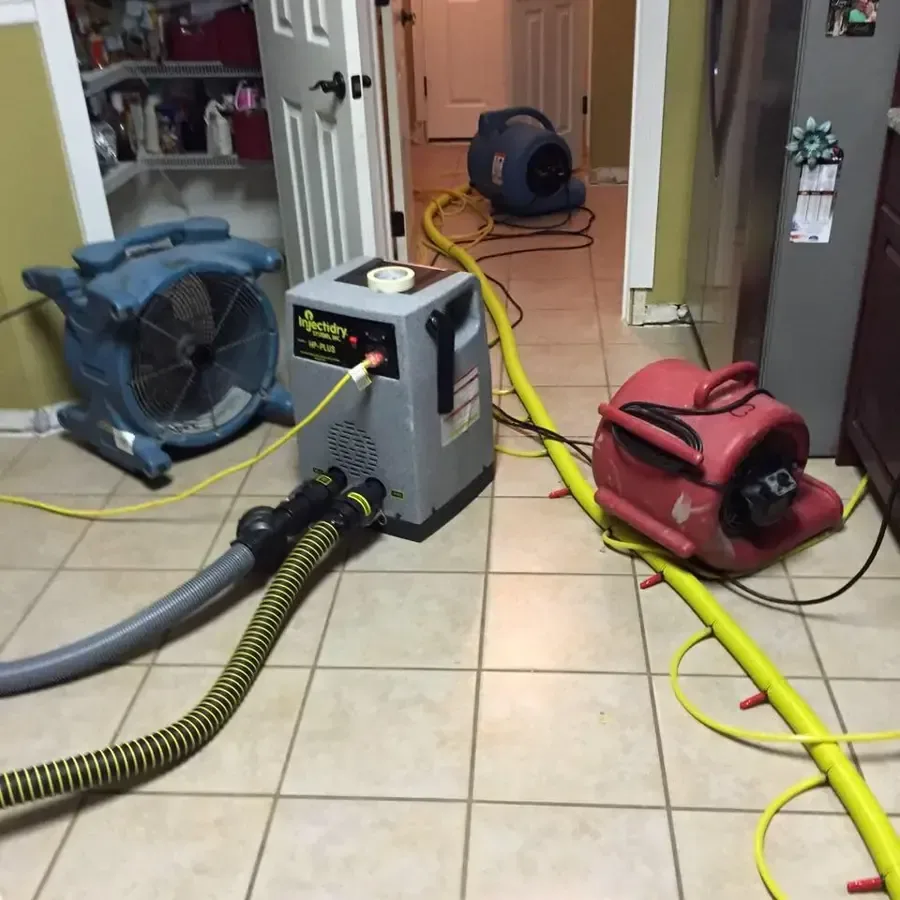
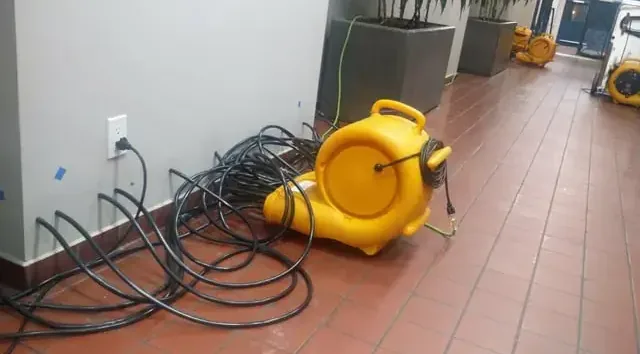
Air movers and dehumidifiers dry retained building materials, with repeated readings showing where equipment or cavity access needs adjustment.
See structural drying and dehumidification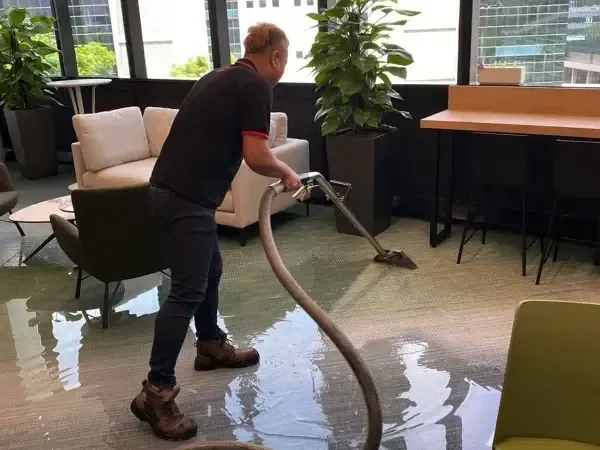
Commercial Water Damage
Downtown Compton workplaces need cleanup organized around affected rooms, safe access, utilities, and business contents that may require protection.
See commercial water damageProtect people and preserve useful loss details
- 1
Avoid an unsafe shutoff
Do not cross pooled water or approach wet electrical equipment to reach a valve, appliance, or breaker.
- 2
Separate the affected area
Keep children, pets, visitors, and movable contents away from sewage, unstable finishes, and wet walking surfaces.
- 3
Photograph the early condition
Capture the source area, water marks, connected rooms, floor transitions, and damaged contents when entry is safe.
- 4
List every place water appeared
Mention ceiling stains, damp cabinets, wet flooring, wall bases, and rooms below or beside the visible release.
- 5
Wait before opening finishes
Leave walls and floors intact until moisture readings show whether a controlled opening is necessary for access or cleaning.
What goes into the cleanup cost?
A contained clean water loss commonly costs $1,200 to $5,500. Sewage, several rooms, concealed migration, and necessary material removal can raise the final amount.
Contained room cleanup
$1,200 to $2,800- Accessible clean source
- Small material boundary
- Focused extraction and drying
Connected area restoration
$2,800 to $7,500- Multiple affected assemblies
- Added cavity access
- Extended monitoring record
Complex controlled project
$7,500 to $18,000- Contamination safeguards
- Selective material removal
- Detailed work zone records
An on-site assessment establishes the actual scope. The water damage cost calculator can provide an early planning range from known conditions.
Cleanup continues after the source is repaired
Extraction removes pooled water before surface cleaning and structural drying. Repeated measurements show which materials are improving and which hidden spaces need closer attention.
Inspect and classify
Identify the release, hazards, apparent water condition, and areas needing controlled access.
Recover liquid water
Extract open water from surfaces, edges, cabinets, seams, and transitions.
Establish drying conditions
Move air across reachable wet material while dehumidification collects released vapor.
Confirm the finish
Recheck each material and record the last location to reach its drying goal.
Source and contact change the cleanup method
Category 1
Clean supply water can deteriorate after time or contact with finishes, contents, or concealed debris.
See extraction detailsCategory 2
Some fixture overflows and appliance discharge call for additional cleaning before affected assemblies can be dried.
See appliance cleanupCategory 3
Sewage and outside floodwater require access controls, protective measures, and careful porous material decisions.
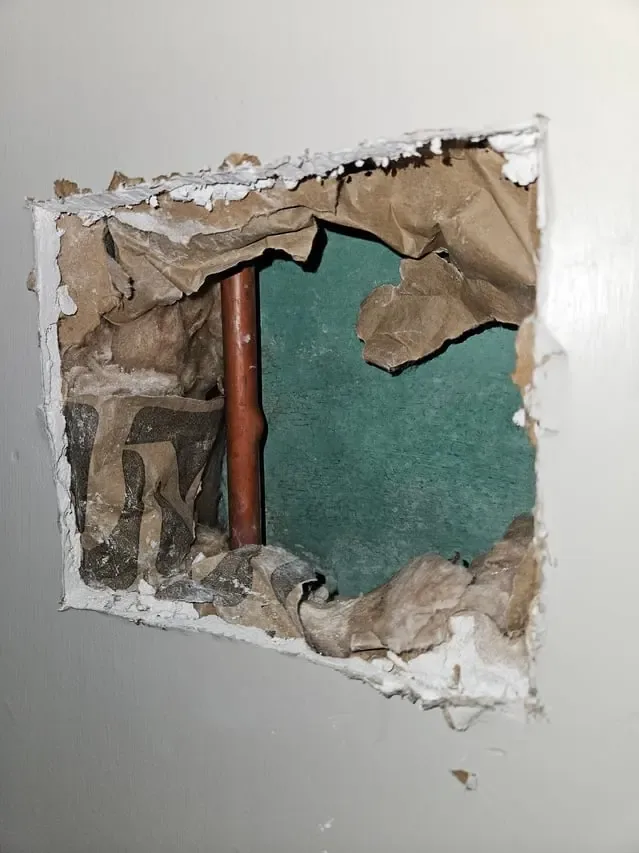
See sewage cleanupExtraction, access, and drying across affected rooms
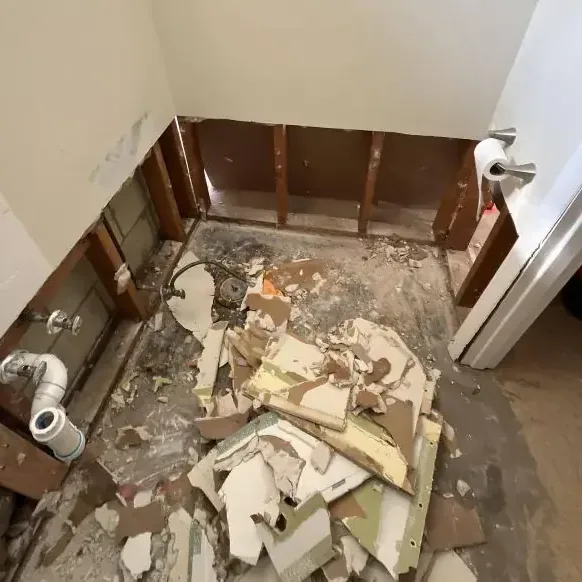
The next room may need inspection too
Water can follow a wall base into a room that looks dry. A Leland home with wet kitchen flooring may also need cabinet and partition checks before cleanup begins.
Classify contact conditions
Clean supply water, appliance discharge, sewage, and rainwater create different controls before equipment placement.
Test connected materials
Flooring, subfloor, drywall, cabinets, insulation, and framing are checked separately because surfaces can hide migration.
Limit openings to evidence
A finish is opened only when contamination, lost strength, trapped material, or blocked airflow makes access necessary.
Finish with comparisons
The slowest drying location is checked against suitable unaffected material and included in the final project record.
Keep the cleanup details with the claim
Source notes, damage photos, and extraction and drying records give the owner and insurer an account of the completed cleanup.
- Source condition and control status
- Affected rooms and materials
- Photographs before access work
- Extraction and equipment adjustments
- Final readings for each assembly
Ask the insurer about terms
Policies can treat sudden water, maintenance conditions, groundwater, and sewer backup differently.
The policyholder should confirm the deductible, exclusions, endorsements, reporting duties, documentation needs, and authorization requirements directly with the insurer.
Water and sewage restoration for local properties
Neighborhoods and community anchors
ZIP codes
Nearby service areas
Serving Sunny Cove, Leland, and the downtown district
Richland Farms and the listed ZIP areas receive extraction, sewage cleanup, and drying services.
The extraction page explains water removal from wet floors and edges.
(888) 563-9619Report the source and affected roomsCompton, CA · [email protected]
Sewer overflows can reach the storm drains
Compton Creek receives water from local storm drains. Sewer main blockages have sent contaminated water into that system, making the source and path of water important when planning cleanup inside a building.
October 8, 2013
A blocked sewer main overflow sent about 150 gallons into a storm drain leading to the creek on October 8, 2013. The event supports careful source classification.
Compton Creek
Recorded sewer discharges reached the creek through local drainage, so contaminated water must remain distinct from ordinary rainwater.
Downtown Compton
Commercial cleanup may need separate work zones and records that keep unaffected areas clearly identified.
Richland Farms
Cleanup starts with the wet rooms, including checks beneath flooring and along wall bases before drying equipment is placed.
Sunny Cove
A leak can reach adjoining cabinets or flooring. Inspection follows damp edges into every affected room.
Municipal water system
The municipal department operates about 14,500 connections. Plumbing repairs stop building leaks; restoration dries the affected materials.
East Rancho Dominguez
This industrial community shares ZIP code 90221. Cleanup separates equipment routes from access to unaffected rooms.
Local water restoration questions
Water is still affecting the building?
Share the source, rooms reached, visible hazards, and whether sewage or outside water is present.
What details help before the visit?
Describe where water began, whether it has stopped, the rooms and floors reached, ceiling or electrical concerns and contact with sewage or outdoor runoff.
How can concealed moisture be located?
The inspection follows connected materials away from the source. Thermal patterns can direct testing, but meter readings confirm whether a wall, floor, cabinet, or ceiling is actually wet.
Does a damp wall always need to be removed?
No. Water condition, material stability, cavity access, insulation, and drying progress determine whether the finish can remain or needs a controlled opening.
Why does extraction come before dehumidification?
Recovering accessible liquid sharply reduces the amount that must evaporate. Air movers and dehumidifiers can then focus on water held inside building materials.
What changes when sewage is involved?
The work area requires controlled access and appropriate protection. Porous materials that cannot be reliably cleaned may need removal before cleaned structural surfaces are dried.
How are equipment adjustments made?
Readings from the same material locations reveal improvement or delay. Airflow, dehumidification, containment, or access can be changed when the recorded trend supports it.
Can dry belongings be moved?
Dry contents may be relocated when handling is safe. Wet or damaged items should remain available long enough for photographs, condition notes, and cleaning decisions.
What does the completion record contain?
It can include source observations, room photographs, moisture locations, extraction notes, equipment changes, material access decisions, and final comparisons with suitable dry references.
Who determines whether insurance applies?
The insurer interprets the policy. Restoration documentation supplies observed conditions and work details, but it does not promise coverage or replace a policy decision.
Which parts of Compton receive service?
Coverage includes Sunny Cove, Leland, Downtown Compton, Richland Farms, East Compton, West Compton, the Gateway area, and properties within the listed ZIP codes.
A water or sewage problem in Compton?
The leaking fixture, affected rooms, and unsafe access help prepare cleanup and inspection of the floors and walls water reached.
Lawndale Water Damage Restoration · Lawndale, CA