Structural Drying in Redondo Beach, CA
After liquid recovery and cleaning, airflow, dehumidification, access, and monitoring are carefully adjusted around the slowest wet material retained inside the complete affected building assembly.
(888) 563-9619Arrange measured room drying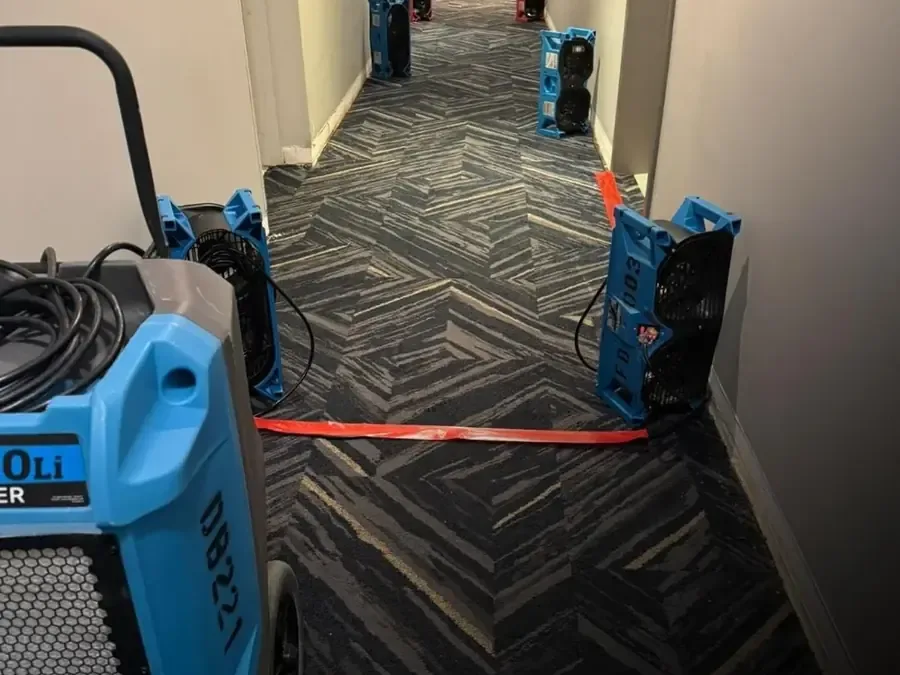
Structural Drying and Dehumidification at a glance
First steps for structural drying and dehumidification in Redondo Beach
Preserve equipment clearance
Keep belongings, doors, and temporary coverings from blocking designed airflow or dehumidifier intake and discharge.
Do not move machines
Equipment positions support a measured plan. Report comfort, noise, cord, or access concerns before relocating anything.
Keep the zone controlled
Limit open windows, unnecessary doors, and traffic that can change indoor conditions or carry debris outside the work area.
Report new moisture
Mention fresh dripping, increasing stains, odors, or new wet areas because they may indicate an active source or missed path.
Structural drying is the phase that addresses water remaining in drywall, framing, subfloor, wood, masonry, and enclosed edges after accessible liquid has been removed. In Redondo Beach, the source could be indoor plumbing, an appliance, sewage, or storm entry. Source and contamination decisions occur before one drying plan is applied.
Place drying equipment around the wet rooms
The work area should include every connected wet material while protecting unaffected rooms. Air movers create evaporation at reachable surfaces. Dehumidifiers collect the released vapor so it does not simply move elsewhere. Equipment quantity and position depend on the material load, room arrangement, access, and indoor conditions measured during the project.
A property near Anderson Park may need a different setup from a business around King Harbor. Local place names do not determine equipment counts or drying time. Readings from the building do. Technicians mark repeatable points at walls, floors, framing, and cavities, then assessment how each location changes between visits.
What does structural drying and dehumidification cost in Redondo Beach, CA?
Contained structural drying commonly costs $1,400 to $7,200. Wet material volume, cavity access, indoor conditions, contamination controls, power needs, and monitoring changes determine the final scope.
Focused drying zone
$1,400 to $2,800- Small material boundary
- Open surface access
- Stable moisture trend
Several connected assemblies
$2,800 to $7,200- Multiple material types
- Cavity monitoring
- Equipment adjustments
Complex concealed drying
$7,200 to $14,400- Controlled access work
- Slow enclosed layers
- Extended documentation
Ranges are typical, not a quote: category of water, square footage, material class and how fast drying started move the number most. Run the water damage cost calculator for a closer range.
The structural drying and dehumidification process in Redondo Beach, step by step
- 1
Set comparison points
Choose repeatable wet locations and suitable unaffected materials so progress has a consistent reference.
- 2
Balance evaporation and collection
Aim air at reachable wet surfaces while dehumidification manages the vapor released inside the zone.
- 3
Read the trend
Assess material measurements and indoor conditions to identify improving, slow, or newly affected locations.
- 4
Resolve the slowest point
Adjust airflow, equipment, or access, then confirm every retained assembly reaches its documented target.
Respond when one material stays damp
A flat trend can indicate blocked airflow, trapped insulation, an impermeable finish, a missed wet layer, or a source that is not fully controlled. The response might be repositioning equipment, exposing an edge, removing failed material, or investigating another route. More equipment is not automatically the correct answer.
- Define wet and unaffected comparison locations
- Place airflow only after cleaning requirements are met
- Record indoor conditions and material readings
- Adjust access when concealed points stall
- Keep the slowest retained material in the final assessment
Equipment operation is also documented rather than inferred. Power interruptions, open doors, moved machines, or a newly exposed layer can change the next reading. Recording those events makes the moisture trend easier to interpret and supports a defensible adjustment.
Finish when readings support equipment removal
Materials release water at different rates, and two rooms can progress differently. Completion comes from a documented target tied to comparable dry material and the property condition, not a generic calendar promise. The water extraction page describes the preceding liquid recovery phase, and the Redondo Beach hub links each source response.
A completed room has its final reading locations recorded so later repairs can use the same reference points.
Structural drying and dehumidification across Redondo Beach and nearby towns
Structural drying serves properties throughout North, Central, and South Redondo Beach, including King Harbor and Anderson Park areas. Direct material readings define each work zone and endpoint. The town overview lists source specific cleanup.
The same service nearby: structural drying and dehumidification in Lawndale, Hermosa Beach, Torrance.
Water damage restoration in Redondo Beach · every town covered
Related water damage services in Redondo Beach
Structural Drying and Dehumidification questions in Redondo Beach, CA
Still dealing with structural drying and dehumidification?
Describe the source, extracted areas, wet materials, current equipment, access limits, and any location that is not improving.
Is structural drying the same as extraction?
No. Extraction recovers available liquid, while structural drying manages moisture retained inside building materials after that recovery.
How long does drying take?
No fixed duration applies to every loss. Material type, saturation, access, indoor conditions, and daily trends determine when targets are reached.
Can equipment be turned off at night?
Unplanned shutdown can interrupt controlled conditions and obscure progress. Safety or comfort concerns should be reported before changing equipment.
Why are readings taken in the same places?
Repeatable locations show a dependable trend and prevent a different test point from being mistaken for improvement or decline.
What if one wall stays wet?
The team assessments source control, airflow, insulation, finishes, cavity access, and possible connected moisture before adjusting the plan.
Are windows opened during drying?
The drying chamber is managed from measured indoor and outdoor conditions. Opening windows without direction can disrupt that balance.
How is drying completion checked?
The slowest retained material reaches a target supported by appropriate unaffected comparisons, stable conditions, and a complete monitoring record.
Why record power interruptions?
An outage changes evaporation and moisture collection. Logging it helps explain the next readings and prevents a false conclusion about material response.
Damp cavities need a planned dryout
Technicians establish comparison points, balance evaporation and collection, adjust stalled areas, and preserve a complete moisture record.
Lawndale Water Damage Restoration · Lawndale, CA