Structural Drying and Dehumidification in Hermosa Beach, CA
Structural drying in Hermosa Valley assigns a dry reference to each retained wall, floor, ceiling, cabinet, framing section, and concealed edge after extraction is complete.
(888) 563-9619Arrange building drying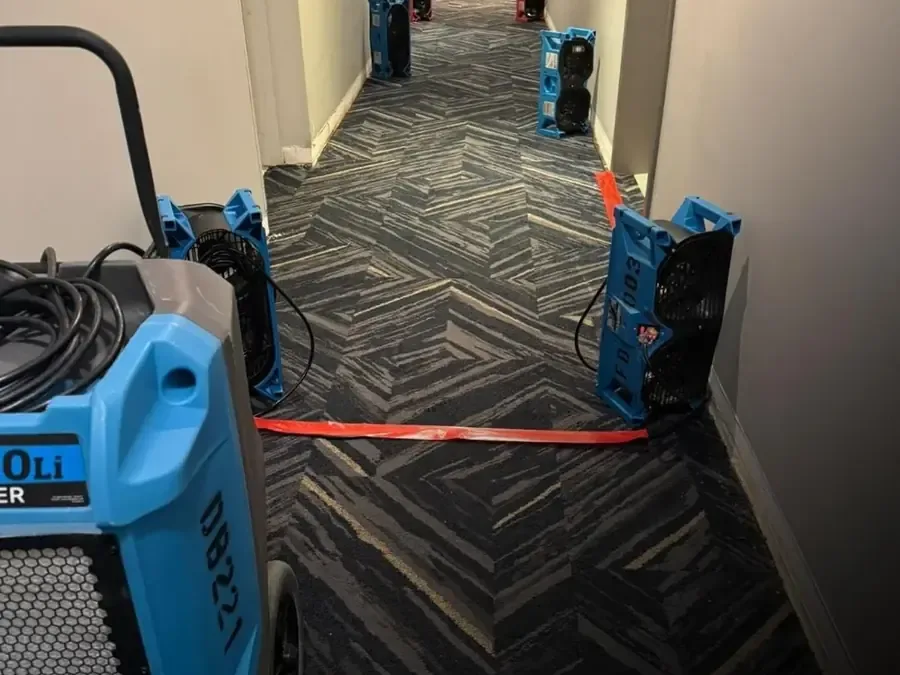
Structural Drying and Dehumidification at a glance
First steps for structural drying and dehumidification in Hermosa Beach
Confirm the release has stopped
Drying cannot progress reliably while plumbing, equipment, a roof opening, fixture, or outside entry keeps adding water.
Keep the initial map intact
Photograph material conditions and record starting readings before air movement and dehumidification begin changing the environment.
Clear equipment circulation
Move dry contents away from vents and cord routes while leaving affected assemblies accessible for direct measurement.
Describe occupied rooms
Identify spaces that must remain in use so containment, noise, heat, cords, and access can be planned.
Structural drying may follow plumbing, appliance, storm, sewage, or condensate water. In Hermosa Valley, the plan begins after the source is controlled and recoverable liquid is removed. Technicians identify the affected framing, subfloor, drywall, masonry, cabinets, or cavities and select suitable dry comparison points.
Set a dry reference for each material
A single room average can hide a wet edge. The starting map labels wall sections, board fields, framing bays, cabinet bases, and floor layers separately. Similar unaffected material provides context for the endpoint, while photographs retain the access condition present before equipment starts.
Near Pier Avenue, occupied and work areas may share close circulation. Cord routes, containment, noise, heat, and equipment access are planned around the actual use of the property. Those operational details change placement without replacing moisture evidence.
What does structural drying and dehumidification cost in Hermosa Beach, CA?
Structural drying commonly costs $1,400 to $7,200. More material zones, difficult cavity access, occupied rooms, and slow releasing assemblies can increase equipment and monitoring needs.
Focused material zone
$1,400 to $2,800- Clear dry comparison
- Accessible wet surfaces
- Short equipment diagram
Several drying assemblies
$2,800 to $7,200- Different material trends
- Multiple airflow paths
- Repeated zone monitoring
Complex occupied dry out
$7,200 to $14,400- Blocked concealed edges
- Coordinated occupied access
- Extended equipment changes
Ranges are typical, not a quote: category of water, square footage, material class and how fast drying started move the number most. Run the water damage cost calculator for a closer range.
The structural drying and dehumidification process in Hermosa Beach, step by step
- 1
Assign a reference to each assembly
Label unaffected comparisons for walls, floors, framing, cabinets, masonry, and other retained materials.
- 2
Create controlled evaporation paths
Balance air movement with vapor collection inside the defined rooms and exposed cavities.
- 3
Respond to the daily trend
Move equipment, change access, or reduce completed areas only when measurements support the decision.
- 4
Remove the last unit from evidence
Close after the dampest point reaches its goal and all equipment changes are documented.
Use airflow to release moisture and dehumidifiers to collect it
Air moving across an exposed wet surface supports evaporation. Dehumidification collects the released vapor and controls the indoor drying environment. Too little access can trap moisture, while uncontrolled airflow can push it toward clean areas, so equipment is balanced within defined boundaries.
- Set dry references before equipment operation
- Label readings by assembly and room
- Create airflow paths into concealed edges
- Record indoor conditions and equipment positions
- Change the plan when a trend stalls
Repeat readings before changing equipment
At North Hermosa properties, a wall cavity may improve while the floor beneath it remains elevated. Daily records make that difference visible. Technicians can redirect air, reduce completed zones, or inspect blocked material when the trend supports a change.
The 2020 census counted both renter and owner occupied housing, a fact that supports varied access planning without defining any building. The water extraction overview explains liquid recovery, while local ceiling restoration shows how cavity access supports drying. A final equipment diagram identifies which units served each material zone and when they moved or left. The closeout summary retains all dry references and the last elevated point, keeping the endpoint tied to the recorded trend. Equipment changes are timestamped by monitoring visit and linked to the material trend that supported them. This record explains why one room lost equipment while another continued, even when both spaces looked similar from the doorway.
Structural drying and dehumidification across Hermosa Beach and nearby towns
Structural drying supports Hermosa Valley, Pier Avenue, North Hermosa, and the Sand Section. Equipment placement follows building materials, occupancy, and direct readings. The local hub connects every source specific service. Each measurement remains tied to its room.
The same service nearby: structural drying and dehumidification in Lawndale, Redondo Beach, Torrance.
Water damage restoration in Hermosa Beach · every town covered
Related water damage services in Hermosa Beach
Structural Drying and Dehumidification questions in Hermosa Beach, CA
Still dealing with structural drying and dehumidification?
Identify the source, retained materials, occupied rooms, and any wall, ceiling, cabinet, or floor area that remains elevated after extraction.
Why should extraction finish before drying?
Liquid water should be recovered first because drying equipment addresses moisture retained in materials. Skipping that phase increases the evaporation load inside the building. The slowest location stays named in the final equipment summary.
How is a dry goal selected?
Technicians compare affected material with a suitable unaffected section of similar construction. The target reflects the actual building and assembly rather than one universal number. Every removal decision cites its reading trend.
Do more air movers always improve results?
No. Air must reach wet surfaces without unsafe cords, uncontrolled spread, or poor vapor collection. Placement is balanced with dehumidification and access.
What happens when readings stop improving?
The crew checks airflow, equipment balance, material layers, and access. A stalled trend can support repositioning equipment or investigating a concealed wet pocket.
Can occupied rooms remain usable?
Use depends on contamination, electricity, access, noise, heat, and cord routes. The plan separates safe activities from controlled work areas when conditions permit.
What belongs in the monitoring record?
Daily logs connect material locations, readings, indoor conditions, equipment positions, access changes, and the reason for continuing, adjusting, or removing each drying component.
Dry the hidden layers as well as the room air
The plan sets dry references, balances airflow with vapor collection, records material trends, and closes only after the slowest retained point reaches its goal.
Lawndale Water Damage Restoration · Lawndale, CA