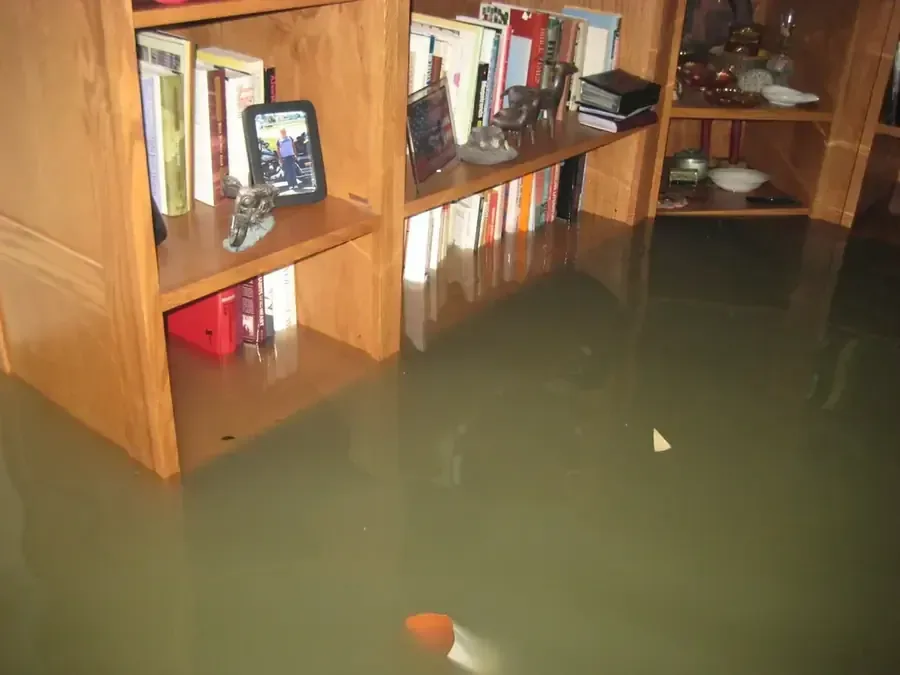
Tropical Storm Hilary brought 2.47 inches of rain to Redondo Beach over three days in August 2023. When rain gets indoors, the cleanup starts at the opening and follows water through the rooms, checking debris, wet finishes, and any damp layers beneath them.
Key takeaways
- Tropical Storm Hilary brought 2.47 inches of rain over three days in August 2023.
- A local storm record supplies timing context rather than proof that a particular address flooded.
- Water that crossed exterior surfaces needs a contact assessment before drying airflow begins.
- Source protection, extraction, cleaning, and structural drying remain separately documented stages.
- The final boundary follows materials and readings, not a neighborhood label or waterfront assumption.
Hilary supplies a benchmark for a weather timeline
Tropical Storm Hilary brought 2.47 inches of rain over three days in August 2023. It was the first tropical storm to hit Los Angeles County after the 1939 event.
Notes from that storm can help an owner match the first indoor water marks with rainfall timing, photographs, and the repairs made afterward.
Redondo Beach also has a longer storm history. A 1953 storm damaged the breakwater, city streets, and private property, while a January 1988 storm caused major waterfront damage.
Storms have repeatedly damaged city piers. Owners can keep storm dates beside photographs of leaks, entry points, and completed roof or drainage repairs.
A current storm cleanup assessment begins with direct evidence. The file records rainfall timing, the suspected opening, temporary protection, debris, indoor water marks, and changes observed as weather continued.
- Write down when indoor marks first appeared.
- Photograph the exterior opening before temporary work changes it.
- Capture sediment and debris before extraction.
- Identify rooms connected by thresholds or wall openings.
- Keep regional weather facts separate from property findings.
Coastal context does not classify indoor water
The city lies along Santa Monica Bay and includes Redondo Beach Pier, King Harbor, and Saltwater Lagoon. Those water features establish location, but they do not identify the source or condition of water inside a room.
A building near the coast still requires the same entry and contact investigation as any other property.
Los Angeles County issues rain advisories when runoff may raise bacteria in ocean water, and levels may remain elevated for 72 hours or more after heavy rainfall. That public health context supports caution around runoff.
It does not replace an indoor material assessment.
The response follows the actual route across roofing, pavement, soil, drains, walls, windows, or doors. Observed residue, odor, debris, and contacted finishes shape cleaning and containment decisions.
Public notices and indoor work also operate on different boundaries. An advisory may cover ocean water after rainfall, while the room assessment may involve one doorway and several connected finishes.
The project file should cite the observed exterior route, not extend the advisory beyond what it says. That distinction keeps public context accurate while allowing the material response to follow direct evidence inside.
- Avoid water touching electrical equipment or unstable finish.
- Keep ordinary traffic from crossing the wet boundary.
- Describe outside surfaces contacted before entry.
- Separate clean equipment access from debris removal.
- Do not use ocean advisories as a property classification.
Source protection and interior recovery solve different problems
A tarp, temporary seal, or exterior repair can reduce new entry. It cannot extract the water already beneath flooring or inside a wall.
The record should show when protection was added and how interior conditions changed afterward.
Extraction removes reachable liquid from hard surfaces, carpet, and accessible edges. Crews then inspect thresholds, wall bases, cabinet toe spaces, and penetrations.
If outside water left debris or residue, cleaning occurs before controlled air movement begins.
The main storm cleanup page describes the broader service, while the local page keeps the Hilary and waterfront history in proper context. Neither replaces readings from the affected building.
Drying starts with a material inventory
A room can contain several water holding layers: finish flooring, adhesive, underlayment, subfloor or slab interface, base trim, drywall, insulation, and framing. Each one responds differently.
A single surface reading cannot close all of them.
The structural drying service establishes unaffected comparisons for matching material. After cleaning and access, dehumidification manages vapor and airflow supports evaporation.
Equipment locations change when the remaining moisture pattern changes.
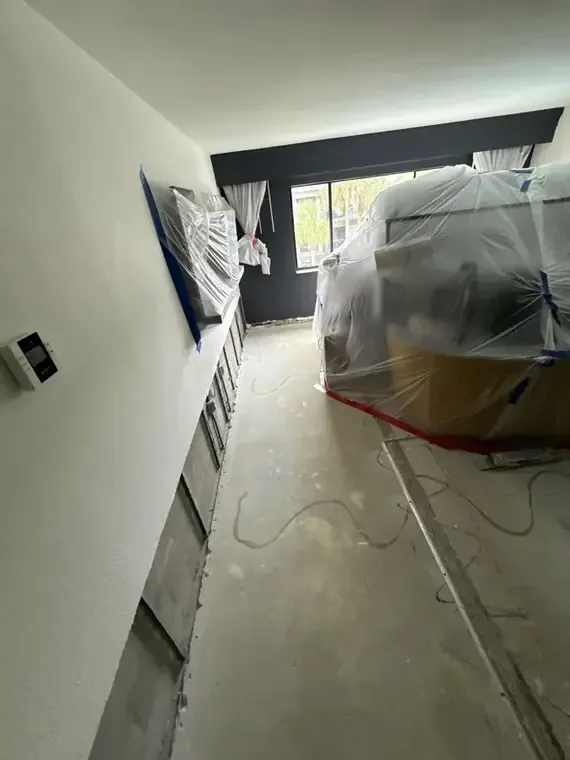
Controlled openings stay limited to evidence. A base section may expose a wall bottom.
A toe space can reveal cabinet contact. A floor edge may need access when the finish blocks evaporation.
Every opening should be photographed and connected with the reason it was made.
- List material layers before choosing equipment positions.
- Compare affected surfaces with matching dry references.
- Monitor the slowest point rather than the easiest point.
- Record changes after exterior protection is installed.
- Keep cleaned and uncleaned areas visibly separated.
Neighborhood names orient service without predicting damage
Service includes North, Central, and South Redondo Beach, plus Riviera Village, Hollywood Riviera, El Nido, and Golden Hills. At each property, inspection identifies the opening, wet floor layers, and roof or wall damage before cleanup starts.
The same restraint applies around the King Harbor area and Pier area. A waterfront setting may influence preparedness, yet the indoor project remains tied to the observed opening and the materials actually affected.
This keeps local context informative without turning it into a building claim.
The local restoration hub brings source specific services together. A property representative can use that connection to distinguish roof work, liquid recovery, cleaning, and structural drying in the project record.
A defensible closeout connects the whole storm sequence
The completion file should reconstruct the event from the first weather observation to the final material reading. It includes the opening, temporary protection, standing water, debris, cleaning, removed materials, access points, equipment changes, and comparisons for retained assemblies.
Photographs taken from matching positions show how the room changed. A floor map identifies the original edge and deepest collection.
A wall map shows affected heights and the last elevated point. The record can then explain why each material stayed or was removed.
A historical rainfall total makes the local discussion concrete. The building evidence makes the cleanup accurate.
Keeping those roles separate is the strongest lesson available from Tropical Storm Hilary.
Questions
How much rain did Tropical Storm Hilary bring locally?
Redondo Beach received 2.47 inches over three days in August 2023. After heavy rain, water marks at doors, ceiling stains, and wet floor edges show where the building inspection should begin.
Does a rain advisory determine indoor cleanup methods?
No. It supports caution around runoff, while the actual exterior contact, entry route, residue, and affected materials establish the building response.
Can drying begin before debris is cleaned?
Strong airflow should wait until extraction, debris removal, and surface cleaning create a controlled environment. This reduces movement beyond the original boundary.
Why keep exterior repair separate from restoration?
Exterior work stops new entry. Restoration addresses water already inside materials. Separate records show when each condition changed and what remained wet afterward.
What closes the structural drying stage?
Matching material readings reach suitable dry comparisons, the slowest connected point is resolved, and final photographs and equipment records support the result.