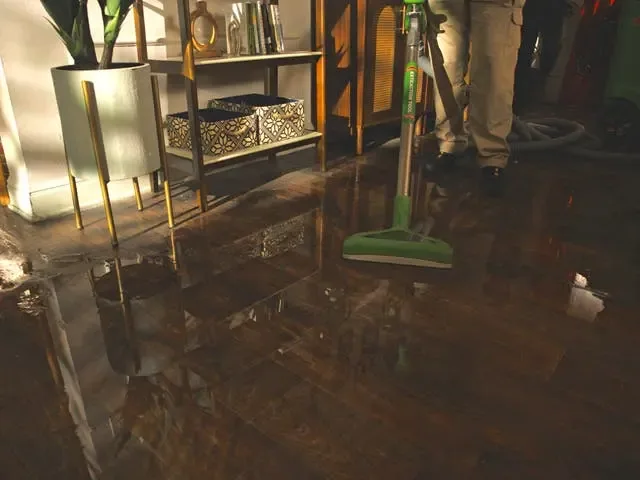
A water main break flooded part of Rosecrans Avenue in 2017. If street water reaches a building, cleanup follows it from the entrance into each wet room, removing pooled water and testing the floors, walls, and cabinets it touched.
Key takeaways
- A documented main break flooded part of Rosecrans Avenue, showing that street water can become a building cleanup concern.
- Photographs of the doorway, wall opening, and wet floor show where street water entered and how far it traveled indoors.
- Surface extraction and concealed moisture mapping proceed as separate tasks.
- Plumbing source work and restoration openings should remain separately labeled in the file.
- Drying finishes only when each affected material reaches its comparison target.
The Rosecrans Avenue event offers context, not a property conclusion
A water main break flooded part of Rosecrans Avenue on November 9, 2017, and police described relatively heavy street flooding. When street water reaches a building, the inspection starts at doors and other low openings, then follows wet flooring into adjoining rooms.
For a present loss, the useful questions begin at the building. Did water cross a threshold, enter through a wall opening, rise through a floor joint, or appear beside a private plumbing component?
Which rooms connect to that opening? What changed after the public or private source was controlled?
The Gardena water extraction service focuses on those indoor facts. A wide photograph of the entrance, a sketch of connected rooms, and labels at the visible edge keep the building record distinct from the street event.
- Record the time the indoor water was first observed.
- Photograph exterior collection and interior marks from a dry position.
- Note the source control reported by the appropriate party.
- Mark every threshold crossed by water or cleanup traffic.
- List flooring, walls, cabinets, and contents contacted.
Water origin and water condition need separate descriptions
A main break describes a plumbing event, but water condition inside can change as it moves. Contact with street residue, soil, building debris, stored chemicals, or a drain affects cleaning decisions.
The response should describe what was observed rather than assuming that every pool remained in its original condition.
The City of Gardena maintains storm drains and the sanitary sewer system. Those public roles do not replace building inspection or establish responsibility for private materials.
Restoration personnel document the indoor boundary while the appropriate utility or plumbing professional handles source work.
If the release instead came from a pipe inside the property, the burst pipe response maps the plumbing opening and the material spread independently. A small repair area can accompany a much wider wet floor or wall field.
- Keep people away from water near electrical components.
- Do not carry wet contents through unaffected rooms.
- Avoid household airflow until cleaning needs are established.
- Separate utility information from indoor material findings.
- Describe odor, debris, and tracked movement before extraction.
Extraction divides the building into workable zones
A pump or extraction tool removes reachable water, but the operator also needs to protect unaffected areas. The building is divided into wet rooms, a clean equipment route, a debris route when needed, and spaces that remain open to occupants or operations.
Hard surfaces may release water quickly while seams and wall edges remain elevated. Carpet, pad, resilient flooring, and cabinet bases can hold moisture differently.
Each finish receives a method that fits its installation and observed condition rather than one routine for the entire floor.
At a multiroom loss, extraction follows the direction of movement from the deepest collection toward the outer boundary. Labels stay in place after the visible pool is gone so later readings can be compared with the original map.
Concealed checks follow connections between materials
Water often continues at the junctions that are easiest to miss: beneath base trim, inside a wall bottom, under a cabinet toe space, through a doorway seam, or along an opening around a pipe. Those points are tested after surface recovery instead of being declared dry by sight.
A controlled opening has a defined purpose. It may expose trapped water, permit cleaning, or create an evaporation route.
Broad demolition before mapping removes useful evidence and can enlarge the repair. Limited access supported by readings keeps the response tied to the affected assembly.
The city has owner occupied and renter occupied housing. Residents and property managers can identify who approves room access, contents movement, and repairs before restoration equipment arrives.
The on-site record should name who controls access without making assumptions about tenure.
- Test matching materials on both sides of room boundaries.
- Check cabinet ends and wall bases after the center clears.
- Label plumbing access separately from drying access.
- Photograph the material before and after any opening.
- Maintain a dry reference for each finish type.
Drying responds to readings instead of the calendar
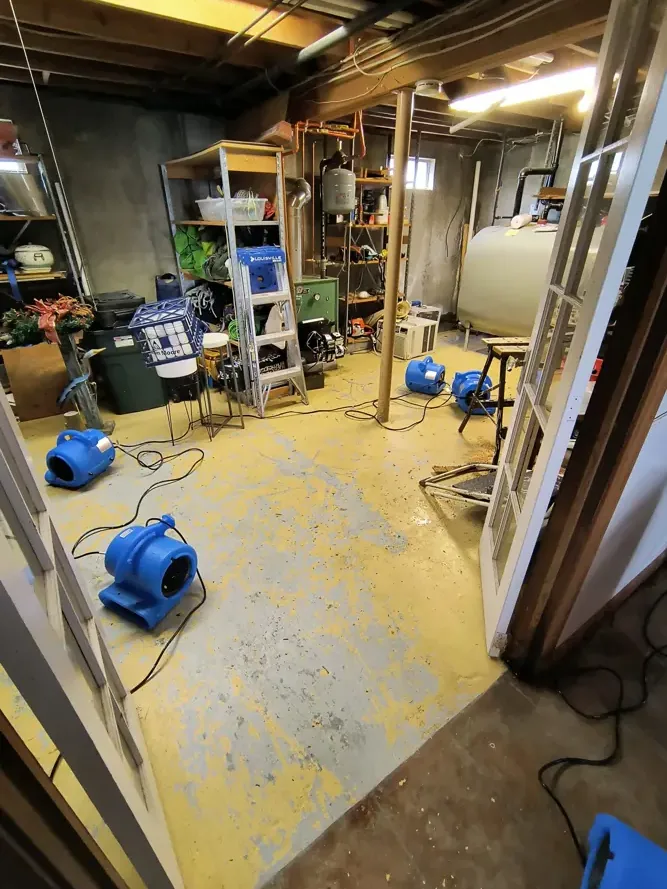
After cleaning and access are complete, dehumidification collects released vapor and controlled airflow supports evaporation. Equipment placement depends on the wet material area, room connections, and where moisture remains slowest.
A machine count alone cannot describe whether the plan is working.
Repeat readings show the trend. If the open floor field improves while a toe space stays elevated, the plan changes at the toe space.
If a wall bottom responds but an adjoining threshold does not, that threshold receives direct inspection. Every adjustment should identify the material it is intended to affect.
The Gardena service hub links extraction with structural drying and source specific cleanup. Those services overlap during a project, but their records remain clear enough to show what stopped the water, what removed liquid, and what dried the retained structure.
The final record should reconstruct the event clearly
A useful completion file allows a property representative to follow the event from street or pipe to the last damp point. It includes the original photographs, source information, water route, extraction areas, cleaning, removed materials, controlled openings, equipment positions, and measurement history.
Final photographs match the original views when possible. The last readings are compared with suitable unaffected material rather than a generic surface claim.
Any plumbing or building repair that remains outside restoration is identified separately.
Service covers Moneta, Strawberry Park, West Gardena, and central Gardena. The closeout records each affected room, its final moisture readings, and any repair access still needed so the owner can follow what was completed.
Questions
Does a nearby main break prove the building water came from it?
No. The timing may support an investigation, but the entry point, utility information, plumbing findings, and material pattern at the building establish the working explanation.
Why is street water evaluated before airflow begins?
Water may collect residue as it crosses pavement, soil, debris, or drains. Cleaning and containment decisions come before strong air movement through the affected rooms.
Can extraction stop after the visible pool is gone?
No. Flooring seams, wall bases, cabinets, and connected rooms can retain moisture. Testing continues until the edge of affected material is established.
Who handles the broken main or pipe?
The responsible utility or a plumbing professional handles source work. Restoration personnel document indoor effects, recover water, clean affected surfaces, and dry retained materials.
What demonstrates that drying is complete?
Repeated material readings reach suitable dry comparisons, the slowest points are resolved, and the final record connects those results with the original water map.