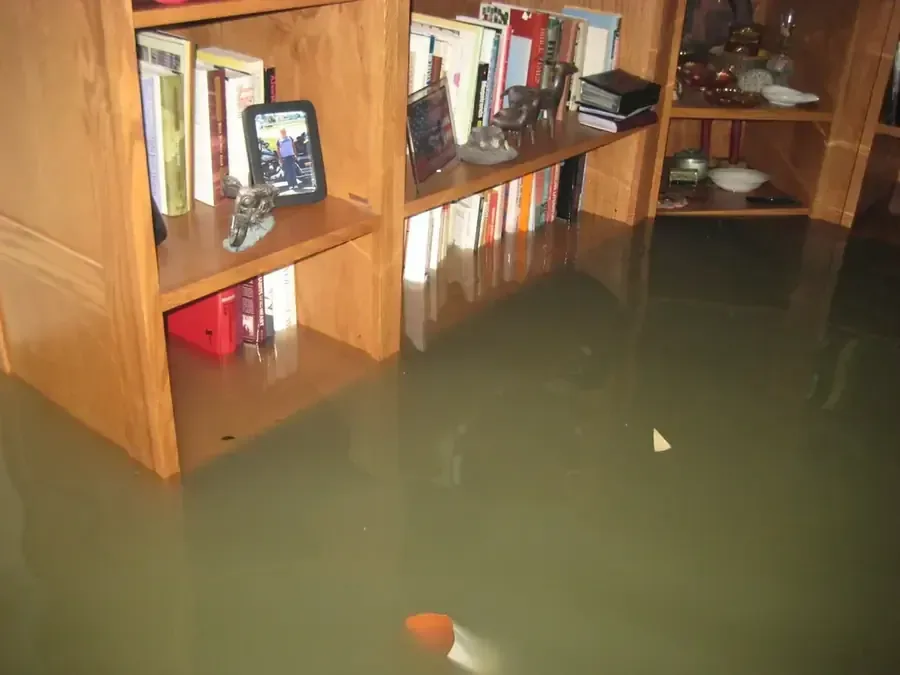
Rainwater crossing pavement can bring dirt and debris through a Lawndale doorway. Once indoors, it may spread under floor edges and into wall bases. Cleanup removes the visible pool, cleans the surfaces it touched, and checks the hidden layers for moisture.
Key takeaways
- City storm drains beneath local streets move rainwater toward the ocean without treatment, so outside water should be assessed from its actual contact path.
- Photographs taken before extraction preserve the entry point, debris edge, water marks, and rooms reached.
- After standing water is removed, moisture checks continue at flooring, wall bases, cabinets, and exposed framing.
- Air movement begins only after the water condition, cleaning needs, and electrical safety are understood.
- Completion depends on comparison readings from each retained material rather than surface appearance alone.
Why the route outside changes the work inside
Lawndale storm drains beneath streets carry rainwater away quickly, and that stormwater flows toward the ocean without treatment. When water leaves the street system and crosses a walkway, parking surface, soil, or building threshold, its contact history matters inside the property.
That history cannot be reduced to the color of the pool. Clear water can still carry fine sediment or residue from the path it followed.
A room assessment starts at the opening and works inward, recording deposits on the floor, splash marks at wall bases, and anything that floated or shifted.
The local storm and flood cleanup service separates outside contact from ordinary plumbing losses. That distinction affects containment, personal protection, cleaning, and whether absorbent materials can remain.
For buildings along Hawthorne Boulevard, Rosecrans Avenue, Marine Avenue, Prairie Avenue, and Manhattan Beach Boulevard, inspection starts where water entered. Photographs of the door, drain, roof edge, window, or low opening help trace the route into the wet rooms.
- Record where exterior water first touched the structure.
- Mark the deepest visible point before pumping changes it.
- Keep shoes, carts, and cleaning tools from crossing into dry rooms.
- Note sediment, leaves, odor, and any affected stored item.
- Identify electrical equipment before anyone enters the wet area.
A safe first look protects people and evidence
A person at the property can observe from a dry location before moving anything. Water near outlets, panels, cords, machinery, or unstable ceiling finishes needs professional control.
Wading toward a switch or carrying wet contents through occupied rooms can enlarge the hazard and erase the original boundary.
Useful photographs begin outside the water. Wide views show the entrance and room relationship.
Closer images capture water marks, door tracks, floor changes, debris, and the condition of base trim. A written time sequence records when rain intensified, when water appeared, and when any temporary barrier was placed.
The water extraction page explains liquid recovery after access is safe. Extraction equipment removes available water, but the operator should keep the original map visible through labels and photographs instead of treating the first pass as the end of the investigation.
- Stay outside water that may touch electricity.
- Keep children, pets, customers, and tenants away from the wet route.
- Move only dry belongings that can be reached without crossing the pool.
- Do not aim household fans across dirty water or debris.
- Preserve receipts and photographs for later property documentation.
Extraction follows the shape of the event
The fastest path across the room is not always the deepest path into the assembly. A shallow sheet can enter the seam beneath a wall, disappear under a floating finish, or collect against fixed cabinets.
The extraction plan therefore divides the area by material and connection rather than treating the floor as one surface.
Hard flooring receives surface recovery first. Edges at thresholds, base trim, cabinet toe spaces, and penetrations receive separate tests.
If water reached carpet or another absorbent finish, the backing and material beneath it need direct evaluation. Dirty residue is removed before a drying system moves air through the room.
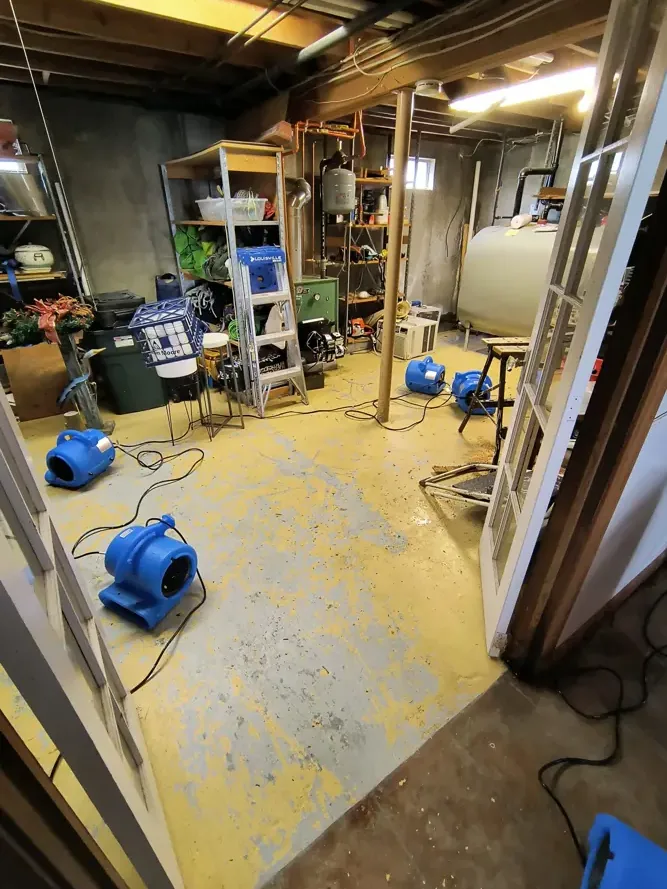
The work map also distinguishes clean circulation from debris movement. Equipment arrives through a protected route.
Removed material leaves through a planned path. This keeps the rest of the building from becoming part of the cleanup simply because workers or carts crossed it.
Moisture can remain after the floor looks clear
A dry looking surface can cover damp adhesive, underlayment, subfloor, lower framing, or the rear face of a wall finish. Readings begin in affected material and continue outward until comparable dry points establish the edge.
Different materials require different reference points, so a wall and floor are not judged by one number.
Selective access is based on what the map shows. A loose base section may reveal the wall edge.
A cabinet toe space can provide a test point. A limited floor opening may be necessary when a finish blocks evaporation or hides residue.
Each opening should answer a defined question and remain in the documentation.
Dehumidification collects moisture released into the air. Directed airflow supports evaporation only after cleaning and material decisions are complete.
Equipment placement changes when the slowest point fails to improve with the rest of the room.
- Compare like materials in affected and unaffected locations.
- Track wall bases separately from floor fields.
- Record every controlled opening and the reason for it.
- Recheck cabinet edges and transitions after equipment changes.
- Keep the slowest material named through completion.
Cleaning comes before a normal drying environment
Outside water can leave a residue that pumping does not remove. Hard surfaces are cleaned across the entire contact field, including seams and edges.
Absorbent materials are evaluated for depth of contact, condition, and whether cleaning can reach the affected portion.
This sequence matters because strong airflow can distribute particles from an untreated surface. The room first needs a stable boundary, removed debris, and cleaned retained materials.
Drying then addresses the water held by those materials instead of moving contamination around the building.
For properties near Lawndale Community Center or Lawndale Library, cleanup records should identify the entry point, wet rooms, and materials that need cleaning or drying. The practical record stays focused on the actual doorway, water path, material contacts, and readings at the property.
A complete record shows why the room can reopen
Completion is a chain of evidence. It connects the rain sequence, source protection, extraction, debris handling, cleaning, material removal, equipment changes, and final measurements.
Photographs should show the original water edge as well as the cleared and dried room.
The final check returns to thresholds, wall intersections, cabinet bases, and the slowest concealed point. Comparable dry material supplies context for each reading.
Equipment leaves only after retained assemblies meet their documented target and the route used for work is clean.
The Lawndale restoration overview connects this process with related plumbing and drying services. For storm runoff, the most useful closeout is a room map that another reader can understand without guessing where the water started or how far it traveled.
Questions
Is rainwater inside automatically treated like sewage?
No. The response depends on where the water traveled and what it contacted. Water that crossed pavement, soil, drains, or debris receives a cautious evaluation before cleaning and drying choices are made.
Should household fans run right away?
Not before the water condition and cleaning needs are known. Airflow across untreated residue can move particles beyond the original area. Extraction and surface preparation come first.
Why test beyond the visible water mark?
Water can move beneath flooring, through seams, and behind base trim without leaving an obvious surface mark. Comparison readings establish the actual edge of retained moisture.
Can all flooring remain after runoff entry?
Retention depends on the finish, depth of contact, cleanliness, stability, and access to the layer beneath. Direct inspection determines whether drying can reach the complete assembly.
What should the completion file contain?
It should connect entry evidence, photographs, extraction, cleaning, removed material, openings, equipment changes, moisture readings, and final comparisons for every retained surface.