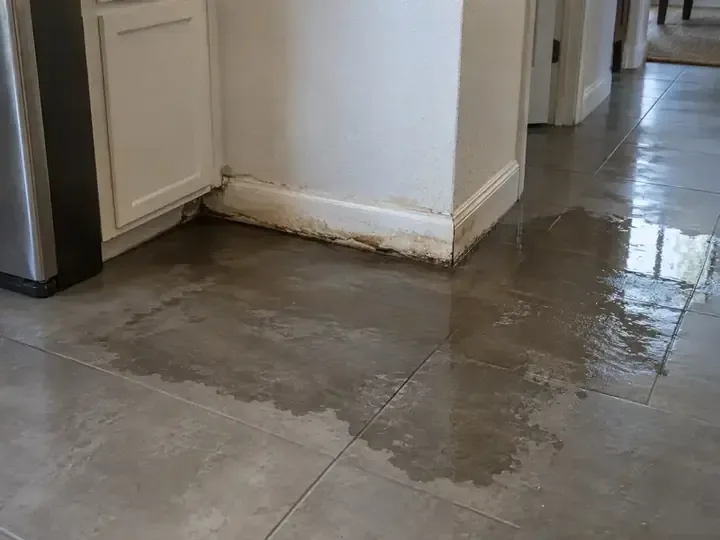
A loose washer connection or leaking dishwasher can send water behind cabinets before a puddle appears in the room. In a Lawndale home, cleanup follows the hose or drain leak through floor joints, partitions, and any occupied space below the appliance.
Key takeaways
- The appliance should be photographed in its observed position before heavy movement changes the connection or floor evidence.
- Supply water, drain discharge, and refrigerator water do not begin with identical cleaning decisions.
- Cabinet toe spaces, flooring seams, wall penetrations, and lower rooms extend the inspection beyond the machine footprint.
- Appliance repair or replacement does not dry water already held in finishes.
- Each cabinet, wall, floor, and ceiling material closes from its own readings.
The machine position preserves the first clues
A washer, dishwasher, or refrigerator can hide the connection that released water. Pulling the machine immediately may tear a hose, disturb a fitting, scrape damp flooring, or erase the original direction of travel.
A wide photograph and reachable close views should come first.
The record notes whether the appliance was running, filling, draining, making ice, or sitting idle when water appeared. Those observations do not replace appliance service, but they help separate a supply connection from a discharge condition.
The appliance leak cleanup service then relates the machine to cabinets, partitions, floor transitions, and rooms below. The point behind the appliance is treated as the start of a material map rather than the entire boundary.
- Photograph the appliance before pulling or rotating it.
- Use only dry and safely accessible controls.
- Record the visible connection and discharge condition.
- Move dry belongings away without crossing wet electricity.
- List adjoining cabinets, rooms, and lower ceilings.
Different appliance releases leave different cleanup needs
A supply connection may release relatively clear water at first, while a dishwasher or washer discharge can contain detergent, food residue, or soil from fabrics. A refrigerator fitting may produce a narrow slow release that travels beneath casework before becoming visible.
The observed water and the surfaces it contacted establish cleaning decisions. The response should not assume that a familiar appliance name determines the condition.
Time, residue, floor contact, and movement through hidden areas all matter.
Lawndale developed as a bedroom community after World War II. In a home with a shared wall, the inspection follows appliance supply connections, cabinet backs, and floor edges toward the adjoining room.
Access to the other side is arranged with the neighboring occupant when needed.
- Distinguish supply water from machine discharge.
- Note detergent, food residue, odor, and visible debris.
- Check whether the appliance sits inside fixed casework.
- Identify every floor finish reached by water.
- Keep repair observations separate from restoration findings.
Cabinets create a concealed perimeter
Water can move beneath a dishwasher, along a refrigerator recess, or behind a washer enclosure and enter the toe space of connected cabinets. Face panels may look dry while the lower cabinet box, wall finish, or floor beneath remains elevated.
Inspection points include removable toe kicks, end panels, pipe penetrations, seams, and the transition into adjoining flooring. A limited opening can reveal the cavity without dismantling unaffected casework.
Material swelling, finish bond, cleanliness, and access help determine what can remain.
A kitchen release may also follow a wall to the opposite room. A laundry release can travel through a doorway or around a floor opening.
The map follows construction connections instead of stopping at the room name.
Fixed casework can divide one leak into several pockets. Water behind an end panel may not connect visibly with water beneath the machine, and a raised cabinet bottom may conceal another section entirely.
The inspection labels each compartment before choosing access. This approach avoids assuming that a dry cabinet face represents the material behind it and helps limit openings to the exact places that need cleaning or evaporation.
Floor seams carry water beyond the visible edge
Surface extraction removes liquid around the machine. Testing then compares finish flooring, edges, thresholds, and accessible material beneath.
Water can follow joints farther than the surface sheen suggests, especially when a machine blocks evaporation.
The first dry looking board or tile is not automatically the boundary. Readings continue into matching material until stable comparisons show that the path has ended.
The wall base and cabinet perimeter are tested separately because they may stay wet after the open floor improves.
If water reached a lower level, the ceiling below becomes part of the same event map. Fixture openings, penetrations, and framing can direct water away from the appliance position above.
The lower room needs its own safety and moisture record.
- Extract accessible water without erasing boundary labels.
- Test beneath removable cabinet toe sections.
- Compare floor materials on both sides of thresholds.
- Inspect the opposite side of shared partitions.
- Check lower ceilings where penetrations connect levels.
Drying is coordinated with appliance service
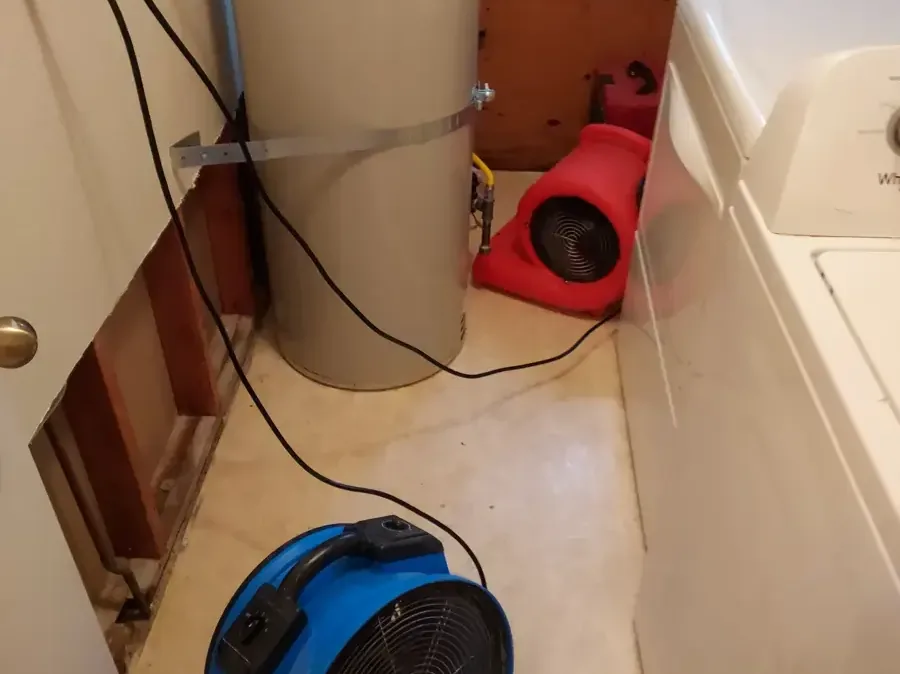
An appliance professional may disconnect, repair, or replace the machine. Restoration personnel need enough access to inspect materials before the appliance returns to position.
The schedule should prevent a repaired machine from hiding wet casework or flooring.
After cleaning and selective access, dehumidification controls vapor and directed airflow reaches retained layers. Cabinet boxes, wall bottoms, floor finishes, and substrate points receive separate readings.
Equipment moves when one perimeter remains slower than the open room.
The structural drying page explains how those readings shape the equipment plan. Appliance operation resumes only after the responsible service professional has addressed the machine and the surrounding work area is ready.
Completion reconnects the machine with the room record
A complete file includes original appliance position, connection condition, rooms inspected, extracted areas, cleaning, machine movement, controlled openings, equipment changes, and final comparisons. Photographs show the appliance recess before and after access.
Hawthorne Boulevard, Marine Avenue, and Prairie Avenue can orient coverage, but they do not predict appliance layout or housing tenure. The Lawndale service overview connects this work with extraction and other source specific responses while keeping each property assessment individual.
The last check returns to the machine perimeter, cabinet edges, threshold, wall backs, and any lower ceiling. Those are the places most likely to retain water after the open floor already appears normal.
Questions
Why photograph an appliance before moving it?
The original position can show the connection, first wet area, and direction of spread. Movement may alter that evidence or damage damp finishes.
Is dishwasher discharge handled like a supply leak?
Not automatically. Detergent, food residue, time, and contacted materials can change cleaning and removal decisions before drying starts.
Can cabinets dry without removal?
Sometimes. Material stability, swelling, cleanliness, cavity access, and reading trends determine whether casework can remain with limited access.
Why inspect the room below?
Water may descend through pipe and floor openings, then appear at a ceiling away from the machine. The lower level needs its own safety and moisture assessment.
What proves appliance leak drying is complete?
Cabinet, wall, floor, substrate, and lower ceiling readings reach suitable comparisons, and the final file shows the machine area and every connected boundary.